• Revolutionizing the Shopping Experience Since 1983

Posts By :

safetra1241

Shopping Safe with Safe-Dock on CBS

Shopping Safe with Safe-Dock on CBS 150 150 safetra1241

Safer Shopping Carts

DAHO FALLS, Idaho – Smith’s Food and Drug is changing the way their shopping carts are designed to keep children safer.

“So the big launch is the focus on child safety in our shopping carts,” said Bruce Herbst, store director at Smith’s.

Shopping with children at any grocery store is not easy, but Monday afternoon, inside Smiths in Idaho Falls, parents with infants can now be sure their kids won’t fall out of shopping carts.

The new carts are designed with Safe Dock systems, which have car seat holders bolted into the shopping carts. Parents put the infant’s car seat inside them and children will safely stay put even if they squirm around.

“I mean you can see the baby and it’s not like you’re constantly peaking to see if he’s okay and it’s not slipping or wobbling,” said mother Kristina Loop.

The store has around eight of these special carts and even though Herbst said there have not been any major incidents at the Idaho Falls location, nationwide a recent study showed 66 kids a day end up in the emergency room for head related injuries. 70 percent of them were caused from falling out of shopping carts, and with the annual rate of concussions up by 200 percent, Smith’s decided to be proactive.

“I’d say they’re probably about 80 dollars a unit,” said Herbst.

A small price to pay, to protect the most important item in your shopping cart.

All Kroger stores- which include Fred Meyer and Albertsons will also have the new Safe Dock system on their shopping carts.

Article from Local News 8

Smiths and Safe-Dock featured on Fox News

Smiths and Safe-Dock featured on Fox News 150 150 safetra1241

Local grocery store adds safe-dock shopping carts for child safety

SALT LAKE CITY — Across America an average of 66 children a day are rushed to the emergency room due to shopping cart related accidents, according to the Research Institute at Nationwide Children’s Hospital.

Smith’s Food and Drug is trying to change those numbers by adding new Safe-Dock shopping carts to their stores. These new shopping carts allow parents to buckle in their child’s baby carrier, just like they would in a car.

Maggie Bennett and her husband Ian say the new Safe-Dock carts have made shopping with an eight-week-old a lot less stressful. Falling out of shopping carts is the leading cause of head injuries among children, according to the study.

“I’d rather not have my daughter hurt by something as simple as going to the grocery store, that’s something a little bit scary,” Bennett said. “You can actually turn the cart without worrying about the baby tipping over and you don’t have to worry about it jostling or the baby falling out — they are a lot safer in there.”

Bennett said it certainly beats other alternatives she has used in the past.

“I used to actually put her into the basket but then you don’t have as much room to shop, you’re putting groceries in, on and around,” Bennett said.

Smith’s has invested a quarter of a million dollars to insure all 132 stores have an ample amount of these carts.

“I think only having one child injured in a grocery cart accident is too many,” said Marsha Gilford, Smith’s VP of Public Affairs. “The new technology is designed to hold any baby carrier at all.”

According to the study, between 1990 and 2011 more than a half a million children were treated for shopping cart related injuries.

Shopper Joey Diana knows these stats all too well. His oldest son had to be rushed to the ER after falling out of a cart when he was a baby.

“We had to do the full range CAT scan to make sure there was no head injury or anything,” Diana said.

Diana added if the Safe-Dock carts were around back then he’s certain his child would have not been injured.

Smith’s is one of only a few retailers in Utah to have these new shopping carts available for customers. A few others include Walmart and Sam’s Club.

The carts are designed by the Safe-Strap company.

Article from Fox News

New Warnings on Shopping Carts Aimed to Improve Shopping Cart Safety – Part 2

New Warnings on Shopping Carts Aimed to Improve Shopping Cart Safety – Part 2 150 150 safetra1241

warning-imageA safer alternative for consumers who shop with infants is to use the Safe-Dock Personal Infant Carrier Docking Stations that are specifically designed to be permanently mounted and used on shopping carts. Safe-Docks are usually made available on several carts within the store. It is important to make sure that shopping carts and seat belts are always kept in good working order; and Safe-Docks are readily available and kept clean. These practices are not only excellent safety and liability measures; but are essential from a customer service and convenience standpoint. The blogs are fervent with moms talking about shopping cart safety and applauding stores that provide the safety equipment that help them care for their children while shopping. The simple practice of providing Safe-Docks and working seat belts in shopping carts is an opportunity for the retailer to make the shopping experience a bit better for parents.

Paul Giampavolo is the leading expert on shopping cart safety. Paul is Chairman of ASTM’s Consumer Products Executive Subcommittee which oversees all Consumer Product standard activities, Subcommittee Chairman of ASTM’s Shopping Cart Subcommittee, recipient of a Consumer Product Safety Commission Chairman’s Commendation in 1996 for Significant Contributions to Product Safety, and President and CEO of Safe-Strap Company. Paul has worked in the retail industry for over 30 years and dedicated his career to child safety.

Infant Injuries from Shopping Cart Accidents Can Easily be Prevented

Infant Injuries from Shopping Cart Accidents Can Easily be Prevented 150 150 safetra1241

Instances of infant carrier-related injuries have increased in recent years. There are about 1,000 injuries annually now, and last year, a child was killed in a Georgia supermarket, which propelled more attention around the issue. Infant carrier materials warn against using the carriers on elevated surfaces, but not all of the materials address shopping carts; even when there are warnings, consumers don’t always read them or mistakenly believe that that practice of putting a car seat on a shopping cart is safe.

What can be done to keep baby safe and be able to shop for all that you need?

Some say use a sling carrier. This keeps baby close and snug.

Another option is the Safe-Dock, a docking station offered by many stores. This docking stations is permanently attached to the shopping cart, has been tested on all major models of shopping carts in use by the largest retailers, and let’s your little one go from car to cart without waking up.

Either way you shop, always stay with your baby.

The Daily Record talks Shopping Cart Safety with Paul Giampavolo

The Daily Record talks Shopping Cart Safety with Paul Giampavolo 150 150 safetra1241

Ruse on the Loose: Wharton company makes shopping safer for kids

Sometimes the best ideas happen by accident.

Watching a news report in 1982, Paul Giampavolo listened as the announcer told how many children were injured falling out of shopping carts every year.

“I had seen it firsthand,” said Giampavolo, who, while working at the Dumont ShopRite in the 1970s, stopped an unrestrained toddler from a shopping cart fall.

“I saw this child stand up in a shopping cart. The parent was nowhere around, the child was at the other end of the aisle. I ran and grabbed the child before he could fall out and sat him down. His mother came around the corner and I told her what happened. And that was sort of uneventful.”

But the recollection remained with Giampavolo while watching the news a decade later in his apartment.

“That memory came right back. I was working in new product development for my company and we were always looking to develop new products. So I had the idea for the shopping cart seat belt.”

Putting together a business plan, he submitted his work to the company’s management who rejected it as too risky liability-wise and unmarketable.

“I really felt passionate about it. So I resigned work to start Safe-Strap. I didn’t have any money. I had about $300. I think my parents thought I was out of my mind, leaving a good job. But I started the company.”

Giampavolo immediately began contacting supermarkets in the New York metropolitan area. It wasn’t until he made his pitch to an ad director at Weis Markets in Pennsylvania, that his idea took fruition.

“He thought it was a great idea and Weis Markets was my first customer. They outfitted the entire chain and ran full page advertisements to the consumer letting them know what they did. The response from the consumer was overwhelming.”

Based in Wharton, Safe-Strap Co. designed the first child safety belt for shopping carts. From that start, they now specialize in products including shopping cart infant seats and restroom baby changing stations, to make shopping for the consumer safer and more convenient.

The company received a letter of appreciation from Nancy Reagan in the 1980s. In 1996, the Consumer Product Safety Commission presented Safe-Strap Co. with a commendation for significant contributions to product safety.

“The company just got bigger and bigger and bigger. We began introducing other products that were shopping cart related like the infant seats. We expanded our product line all around items that could be used in a commercial setting that would help parents care for their children. That’s how the company’s grown.”

In 2014, Safe-Strap launched a new device call Fall-Stop, an alternative to the safety belt. The product is currently being tested locally in ShopRite supermarkets and Safeway stores in the Washington, D.C. area.

“Seatbelts are effective but they’re only as effective as a parent’s desire to use them. Children shouldn’t be put in the basket of a shopping cart and if they’re put in a seat of a shopping cart, they should be buckled up.”

There are 20,000 injuries involving children under five in shopping carts each year with approximately 80 percent of those from falls.

“Half of the falls come from the basket where the child doesn’t belong and the other half comes from falls from the seat where parents didn’t use the restraint. So the hazard awareness is very low. That child seat was a place for a handbag or for a watermelon or eggs and they don’t really realize that a child could fall out,” said Giampavolo, who resides in Sussex County with his wife and son.

“A belt itself might seem restrictive to a parent. So you put the belt around the child and you adjust it. But children can be cranky, maybe they don’t want it around them. So parents may unfasten it to keep the child quiet.”

While sitting in the cart, Fall-Stop allows small children full upper-body movement while restricting their legs enough to let them feel comfortable but not let them climb out of the seat.

“A child can’t fall unless they can get a leg up and they can boost themselves up. I said, there has to be a way we can hold the child’s legs and we can give them that upper body freedom. Children like to reach out for things and they like to turn around,” said Giampavolo, who graduated from Ramapo College with a BA in marketing.

“Kids are very antsy and they want to move around all the time. We designed the Fall-Stop to go down on the child’s legs. We had it tested to make sure that children couldn’t open it or couldn’t defeat it. It’s just a great product.”

The Fall-Stop is bright red with a yellow button, and is attached to the center of the seat. A prompt tells the parent to press the button down on the child’s legs. After installing them in carts at a Shop Rite on a Wednesday, Giampavolo returned on Saturday and was happy to see everyone with a child was using it.

“The best ideas are the simplest ones. But even having a good idea and making that into a viable product that operates and works properly and does what it’s intended to do is no guarantee of its success. You still have to be accepted by the market, it’s got to be priced correctly, it’s got to be distributed properly. There’s a lot to it, so it’s really been a life’s work,” Giampavolo said.

“We’re a New Jersey-based company. We’re all around the premise of making stores safer and more convenient for shoppers. You can see our products in just about every retail store there is. It’s been very, very rewarding and fulfilling to own and grow a business but also to be doing something really good for parents and small children.”

Article from the Daily Record

ABC KIVI TV and Albertsons Showcase Shopping Safe with Safe-Dock

ABC KIVI TV and Albertsons Showcase Shopping Safe with Safe-Dock 150 150 safetra1241

Car seat latch system makes shopping carts safer

Improper use of a shopping cart is to blame for nearly 24,000 kids visiting the ER across the country each year. This surpasses injuries from high chairs, strollers, changing tables and other equipment.

A handful of Boise area stores such as Walmart, Trader Joe’s, Albertsons and Paul’s Market have outfitted some of their shopping carts with the Safe-Dock system for infants. The specially-designed carts keep infant car carriers securely in place. This directly addresses a dangerous trend of parents balancing infant carriers and car seats on top of shopping carts – which too often, tip-over and lead to head injuries.

Dennis McCoy and Donna Porritt demonstrated how the Safe-Dock system works on Good Morning Idaho.

Article from Good Morning Idaho

New Warnings on Shopping Carts Aimed to Improve Shopping Cart Safety – Part 1

New Warnings on Shopping Carts Aimed to Improve Shopping Cart Safety – Part 1 150 150 safetra1241

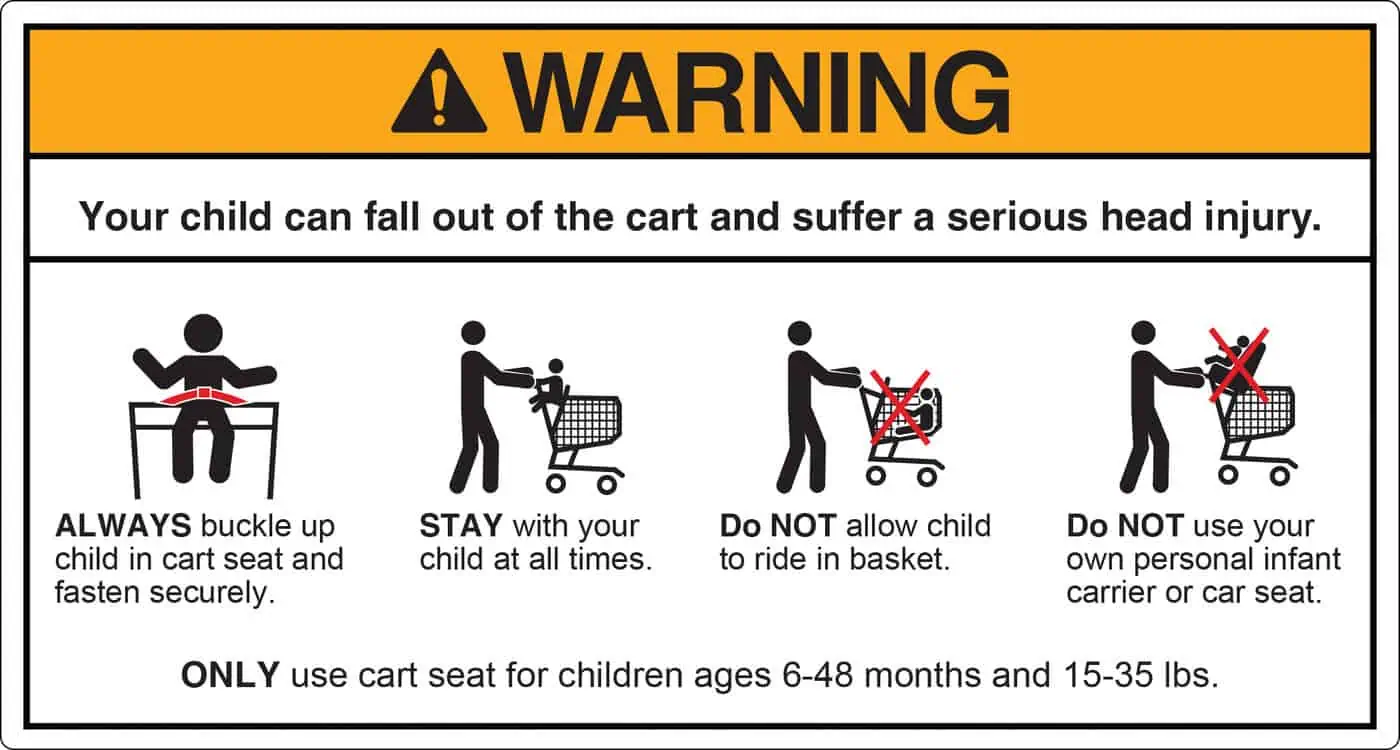
Beginning in January 2012 shopping carts began displaying a new warning label alerting consumers not to use their own personal infant carriers or car seats on shopping carts. This new warning is in direct response to the hundreds of infants who were seriously injured in stores when their carriers fell from shopping carts. In November of 2011 an infant tragically died when his infant carrier fell from the cart in a supermarket parking lot. Personal infant carriers are not designed for use with shopping carts and most manufacturers of the personal carriers have been warning consumers against using their products in conjunction with shopping carts for years. Now the shopping cart industry is communicating this message by placing the warning directly on the shopping cart itself.

warning-imageAccording to the Consumer Product Safety Commission some 20,000 children are injured in shopping carts each year. 82% of these injuries are falls, making shopping cart falls the nation’s top injury to children under the age of 5. While the majority of these injuries involve small children, mostly in the one to two year old range who fall from the seat or basket portion of the cart, 5% of these injuries involve infants whose carrier falls from the shopping cart.

The new warning was developed by the ASTM Shopping Cart Subcommittee and is part of the newly revised shopping cart standard. ASTM International (American Society for Testing & Materials) formed a technical subcommittee with active participation from the Consumer Product Safety Commission to analyze the causes of why children fall out of shopping carts and what can be done to prevent injuries. Developing ASTM safety standards is the process by which children’s injuries involving consumer products are addressed and remedied in the United States. This subcommittee reviewed injury data provided by the National Electronic Injury Surveillance System (NEISS), Injury or Potential Injury Incident Database (IIPI), and special studies done by the Consumer Product Safety Commission. The ASTM standard calls for safety restraints on all shopping carts, keeping carts and restraints in good working order and providing warnings to the consumer.

Paul Giampavolo is the leading expert on shopping cart safety. Paul is Chairman of ASTM’s Consumer Products Executive Subcommittee which oversees all Consumer Product standard activities, Subcommittee Chairman of ASTM’s Shopping Cart Subcommittee, recipient of a Consumer Product Safety Commission Chairman’s Commendation in 1996 for Significant Contributions to Product Safety, and President and CEO of Safe-Strap Company. Paul has worked in the retail industry for over 30 years and dedicated his career to child safety.

Operations Specialty Products

Operations Specialty Products safetra1241

Our operations products increase back room efficiency.

Shoppers Convenience

Shoppers Convenience safetra1241

Give your shoppers the little extras they need to stay safe and shop longer.